
The Africa Cup of Nations will remain a biennial tournament after the Confederation of African Football reversed its decision to move to a four-year cycle. CAF's executive committee voted unanimously on Friday to keep the competition on its traditional two-year schedule, a move that guarantees South Africa more frequent opportunities to compete for continental glory.
The decision overturns a previous plan that would have seen AFCON shift to a four-year rhythm starting from the 2028 edition. The next tournament will be co-hosted by Kenya, Tanzania and Uganda next year, with subsequent finals scheduled for 2028, 2031 and 2033. CAF also confirmed that its final tournament, along with those of other confederations, will not be held in the same year as the FIFA World Cup.
CAF President Patrice Motsepe said the choice was made to serve the broader interests of football on the continent. "The decision by the CAF EXCO that the CAF AFCON should take place every two years was based on advancing, protecting and promoting the interest of African football and CAF’s 54 member associations, as well as the interest of African players employed by football clubs outside Africa," Motsepe stated.
The governing body expressed concerns that its proposed new Africa Nations League would require several years to generate significant financial and developmental benefits. Maintaining the current AFCON frequency ensures a steady stream of high-profile matches and commercial revenue for member nations in the interim.
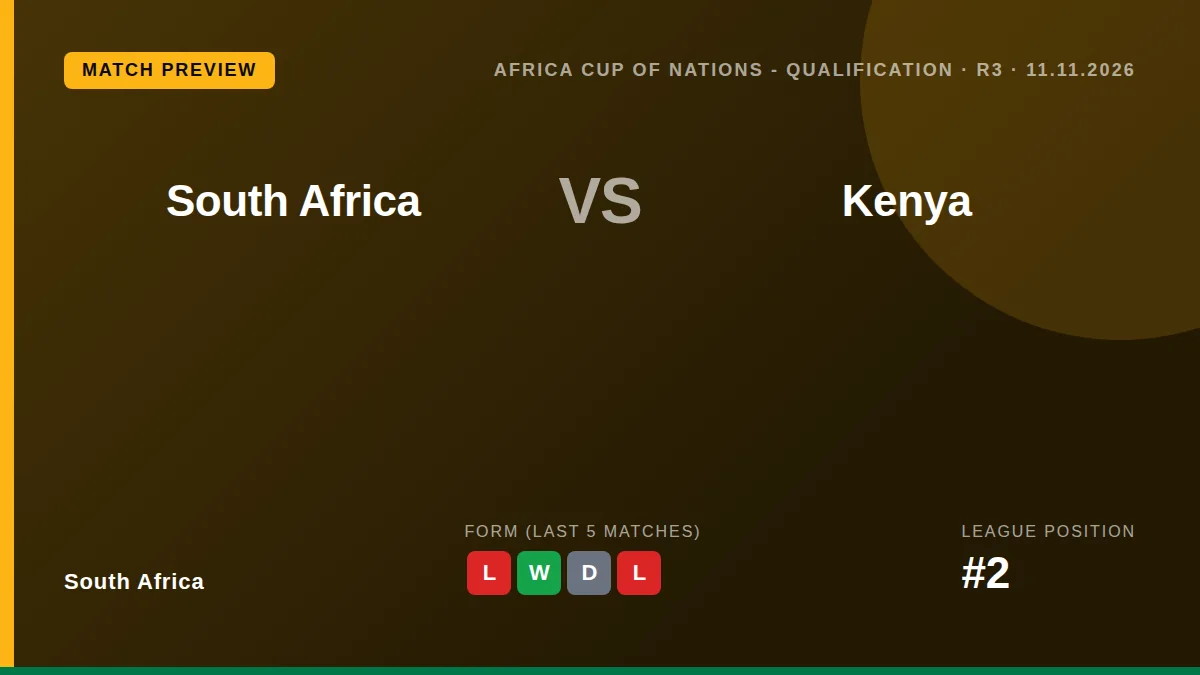
For South Africa, the news arrives as the team prepares for a key home fixture against Kenya on 11 November. Hugo Broos's side will look to build on a positive start to their campaign, having beaten Egypt 1-0 in their last outing on 4 October. Percy Dithejane scored the only goal in the 51st minute of that match, securing a valuable away win.
That victory forms part of a recent run where South Africa are unbeaten in their last match, with one win from their most recent outing. The retention of the two-year AFCON cycle means Bafana Bafana will have consistent targets to aim for, with qualification campaigns becoming a more regular feature of the international calendar. This structure provides clearer long-term planning for squad development and competitive preparation.
The team's immediate focus, however, is squarely on the visit from Kenya next month, a match that will offer another chance to climb the standings in their qualifying group. The fixture at home presents an opportunity to solidify their form ahead of the next continental tournament cycle, which now has a confirmed and familiar rhythm.
Background and full detail: washingtonpost.com